
Zomato's mega initial public offering (IPO) ended with a bumper 38 times oversubscription on Friday as institutional investors poured money to get a pie of the hottest online food delivery platform. Zomato got bids for 2,751.25 crore shares against 71.92 crore shares on offer, stock exchange data showed. The IPO is India's biggest since March 2020. Institutional investors, who shied away in the first two days of the IPO, bid several times over the number of shares reserved for them.

Commodity futures exchanges are set for another round of equity restructuring with the Forward Markets Commission, the regulator, currently finalising guidelines that will require anchor investors to prune their equity holding to 26 per cent from the present 40 per cent after three years but before five years.

Real estate developer Oberoi Realty on Friday said it will hit the capital market with its initial public offer on October 6.

Indiabulls has offered to sell 26 per cent of its stake in the year-old Indian Commodity Exchange to an ADAG group company.

The challenge isn't in selling -- it's easy to sell when the market peaks. The real challenge is in buying back.
Nasscom will float a Rs 100 cr fund to help individuals and small companies in setting up and innovating their business. Tata Consultancy Services, Bharti Airtel Ltd and ICICI Knowledge Park to be key investors.

In other IPOs, the minimum dilution to the public will be 25 per cent, or Rs 400 crore, whichever is lower.
Indian Oil Corporation signed an agreement with West Bengal government on Wednesday for setting up a world class petroleum, chemical and petrochemical hub at Haldia.

Indian companies are now more confident about the execution skills of local banks.

Not just from the likes of Alibaba and Didi Chuxing, Indian startups saw a surge in Chinese funding from financial investors in 2019. This is a seven-fold jump from $459 million in 2016.

The mid- and small-cap indices had a dream run between January 2017 and January 2018 - zooming 48 per cent and 56 per cent, respectively.

MCX Stock Exchange is bullish on breaking-even in one year's time frame.

Foreign Portfolio Investors' (FPIs) selling spree continues as they pulled out over Rs 3,400 crore from the Indian equity markets in the first three trading sessions of November on rising interest rates and geopolitical tensions in the Middle East. This came after such investors withdrew Rs 24,548 crore in October and Rs 14,767 crore in September, data with the depositories showed. Before the outflow, FPIs were incessantly buying Indian equities in the last six months from March to August and brought in Rs 1.74 lakh crore during the period.

Shyam Metalics and Energy (SMEL) will end the over two-month drought in the initial public offering (IPO) market. The steelmaker will launch its Rs 909-crore offering soon. SMEL has pruned its IPO size from Rs 1,107 crore, with the promoters deciding to offload shares worth Rs 252 crore as against Rs 452 crore planned earlier. The company has priced its IPO between Rs 303 to 306 per share.
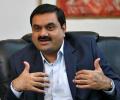
Adani Enterprises, which is launching India Inc's second-largest follow-on public offer worth Rs 20,000 crore next week, on Thursday said it is planning to enter the water segment as this is a key element of its core business of infrastructure. The group is into the entire gamut of infrastructure -- being its ports, airports, roads, expressways power generation & distribution, among others. In ports and airports, the group is the largest player in the private sector. Addressing media from Milan, group chief financial officer Jugeshinder Singh said the company has fixed the price band for the Rs 20,000-crore issue in the range of Rs 3,112-3,276 per share.

'We work with a very large restaurant base, we make sure that we're doing the right thing by them, and we're helping them grow because we'll grow only when they do.'

'A key reason for the strong interest in IPOs has been an increased focus on profitability and reasonable pricing of deals.'

Given that the ETF has given exceptional returns over the past year, start small and buy more in a staggered manner.

Food delivery platform Zomato's initial public offering was oversubscribed on the opening day on Wednesday with retail investors bidding for 2.7 times the number of shares reserved for them. The offer received bids for 75.60 crore equity shares against an IPO size of 71.92 crore, stock exchange data showed. Retail investors sought 2.69 times the portion reserved for them. Against 12.95 crore shares reserved for retail individual investors, 34.88 crore shares were bid by 1700 hours.

'We are cautious only on sub-sectors that have seen massive melt-up during the past six months.'

In a boost to the embattled Adani Group, Mauritian Financial Services Minister Mahen Kumar Seeruttun has told the nation's Parliament that Hindenburg Research's allegations of the presence of 'shell' companies in the Island nation are 'false and baseless' and that Mauritius was in compliance with OECD-mandated tax rules. US short seller Hindenburg on January 24 alleged that billionaire Gautam Adani used shell companies based in Mauritius to manipulate stock prices of his Indian-listed companies.

'The market should maintain optimism on the back of range-bound oil prices, a robust fiscal balance sheet, a better-than-expected monsoon, and moderating inflation.'

Markets watchdog Sebi on Tuesday decided to tighten norms for utilisation of IPO proceeds by companies, introduce special situation funds to invest only in stressed assets and amend various regulations, including those on mutual funds and settlement proceedings. The board of Sebi, which met on Tuesday, also gave its nod for amending Foreign Portfolio Investor (FPI) regulations and introducing a provision for appointment or re-appointment of any person, including as a managing director or a whole time director or a manager, who was earlier rejected by the shareholders at a general meeting. Once the amended norms are in place, such appointments or re-appointments can only be done with the prior approval of the shareholders.

Waves of foreign portfolio investments worth over Rs 51,000 crore splashed into the Indian market in 2021 as overseas investors turned net buyers of domestic securities for the third straight year while excess global liquidity and other factors steered the ebb and flow of their investing ways. With the global financial system still flush with liquidity, emerging market assets, especially equities, might well remain the preferred investment avenue for many more months to come, experts opined. As the equities sizzled during most of 2021, that also saw economy slowly coming back into the recovery path, Foreign Portfolio Investors (FPIs) turned net buyers but their investment is much less compared to net inflows of Rs 1.03 lakh crore in 2020.

A Delhi University alumnus with an MBA in finance and a doctorate, Vaish started his career as a banker in 1984, became an academician a few years later and joined the capital market in 1998.

The story of Sahara India Pariwar founder Subrata Roy, who died in Mumbai on November 14 aged 75, is the stuff of movies - of a spectacular rise and an equally spectacular fall. Born in Araria, Bihar, Roy was 30 when he set up Sahara in 1978. He started with a capital of about Rs 2,000, a peon, a clerk and his father's Lambretta scooter in Gorakhpur, eastern Uttar Pradesh, writes Tamal Bandyopadhyay in his 2014 book, Sahara: The Untold Story. Sahara was not his first venture.

Domestic markets may see the return of retail investors finally as earnings from equities have turned positive in recent months, brokerage firm Morgan Stanley said.
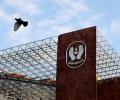
Life Insurance Corp of India (LIC), which is aiming to launch its initial public offering (IPO) next month, is set to alter the pecking order of top listed companies in the country. Depending upon where the government prices the IPO, the stock could end up becoming India's most valuable company on the first day and even get fast-tracked into global benchmark indices given its sheer size. According to market sources, LIC's IPO is targeting to mop up Rs 63,000 crore and Rs 75,000 crore.

Inter-ministerial programmes have run into obstacles as rules written by bureaucrats hamper rather than promote investments.
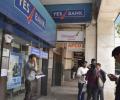
The bank may post a loss of Rs 1,000 crore during October-December 2019-20 quarter, an analyst commented.

This is the biggest IPO in the Indian market since Bharti Infratel's over Rs 4,000 crore public offer in December 2012.

IndiGo has a fleet of 98 aircraft and about 75 of them are on operating lease.

Investors including units of Morgan Stanley and Citigroup have agreed to buy 28.3 million shares of Bharti Infratel at Rs 230 apiece.

This was the biggest IPO in the Indian market since Infratel's.

Udayan Mukherjee, who stepped down earlier this week, was the first full-fledged market commentator Indian business television knew of.

Monte Carlo has raised a little above Rs 100 crore (Rs 1 billion) from anchor investors at Rs 645 a share.

BSE, the oldest stock exchange in Asia, aims to raise up to Rs 1,243 crore from the IPO, which has a price band of Rs 805-806 per share.
Sebi's suggestions are good but investors should not become overconfident.

Hectic fundraising through IPOs will continue next week, with three firms -- One97 Communications, owner of Paytm; Sapphire Foods India, which operates KFC and Pizza Hut outlets; and Latent View Analytics -- are set to launch their initial share-sales to collectively mop up about Rs 21,000 crore. This comes after five companies successfully concluded their public offerings (IPOs) this week. Those five firms are - FSN E-Commerce Ventures, which runs online marketplace for beauty and wellness products Nykaa; Fino Payments Bank; Policybazaar parent entity PB Fintech; decorative aesthetics supplier SJS Enterprises; and microcrystalline cellulose maker Sigachi Industries.
If there is one regulation that has undergone the highest number of changes over the past five years, it is the Issue of Capital Disclosure Requirements (ICDR) Regulations.
